Sasha Grey reads to children, and parents are pissed

This is a blog, among other things, about the cross sections of parenting and sexuality.  Usually I’m thinking about maintaining your sexuality as a parent, or talking to your kids about sex.

But the two issues recently intersected in a whole new way when former adult actress Sasha Grey read to a group of third graders as part of the Read Across America project.  She tweeted that the kids had been sweet.  Parents flipped out to the point where the school district tried to denying it ever happened, despite photographic evidence to the contrary.  Now they are saying they will “review” participants in the program more carefully.

Which leads me to think about why the parents were freaking out.  You’d have to be familiar with her work to know she’s a former porn actress.  Which, I would assume, would mean you watch porn.

It’s not like she was reading Penthouse Forum letters to the kids.  Nor was she there on a career day to discuss what the pros of acting in porn.  She didn’t spread her porn cooties.  She was dressed in everyday clothes, not fetishwear.

Parents?  Chill out.

She read a book to a group of kids, promoting literacy.  It’s a GOOD thing.

They weren”t old enough to know anything about her.  NOR would they have likely ever realized anything about her former career had it not become a major news item.  So by making it an issue, you were able to inform all of them (a) what a porn movie is (b) what a porn star is (c) that they’d been read to by one AND (d) made it FAR more likely they’d google her works and be introduced to adult images.

In being so eager to slutshame, to throw stones, those eager to persecute her seem to have been the ones to highlight the very thing they didn’t want their kids to know.

Personally…if she wants to read to my kids…I’d love a break; I can only read “Pinkalicious” so many times before my head explodes.

Birth Control

I know a lot of pregnant women are shocked when asked about their post-baby birth control plans.  Birth control hasn’t been a part of your life in a long time (depending on how hard-won your baby is, possibly in a VERY long time).

However, there is a term for people who don’t have a game plan about post-baby birth control–parents of another kid.

Yes, breastfeeding CAN suppress ovulation.  Until six months or the FIRST time you go six hours between start of feed and start of feed.  That suppression is not effective in 100% of women.  You can’t rely on breastfeeding to be your birth control.  Even if you’d like another child-there are many reasons to wait 18-24 months before getting pregnant–another pregnancy so soon will be very difficult on your body and raises your chances of problems during pregnancy and pre-term birth.

If you’re on the fence about what method you want to use or are interested in a new option, may I strongly encourage you to check out Planned Parenthood’s website on birth control?

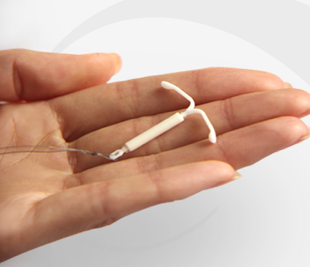
Personally, I’m getting another Mirena

I have tried many forms of birth control over the years, and this is the easiest by far.  Yes, it hurts to have it inserted, and it’s a good idea to plan to be home in bed that day (and possibly one more day).  BUT, once it is in, you are clear for sex without any secondary measures (like condoms) and you are pregnancy-free for five years before you need to get it re-moved and new one inserted.

I don’t plan to have more children, but if you want another (as I did after the LM), you can just get it removed and fertility returns immediately.  I got pregnant 2 months after my last Mirena was removed.

I am not being paid to shill for Mirena–this is a product I’ve used and that I like.  I suck at the take a birth control pill every day, much less every day at the exact same time.  The shot can cause issues with bone density. I didn’t like the ring.  The patch irritated my skin and gave me a rash.  Condoms are too easily forgotten in the heat of the moment.  The copper IUD isn’t recommended for women who have bleeding disorders (as I do).  Hence, Mirena is really my best option.

If we were in the US, I would likely be getting the Essure female sterilization procedure done, but no one in my current home country is licensed to perform it, so back to Mirena I go.

Co-sleeping is the new Voldemort

Parenting, at least in the US, is all about protecting your children from the 8 million and a half things that could kill them daily.  At least if you believe the media coverage of parenting, which is always filled with DEADLY RECALLS and WHAT ARE YOUR CHILDREN SEEING/HEARING/EATING/etc…FILM AT 11.

I’m not an attachment parent per se, although I do practice some of the behaviors espoused by the philosophy, such as baby-wearing (ie, using slings) and more often than not co-sleeping.  My parenting philosophy, such as it is, is best described as “whatever works.”

After the tragic death of a baby in a sling in the last year, suddenly slings are dangerous devices, and most slings come with safety warnings.  One death and suddenly all kids are in mortal peril.

Co-sleeping is something that can be done well or dangerously.  Outside of the US, in fact, co-sleeping is the norm.  However, Milwaukee has a high SIDS rate, and rather than address issues like poverty, they’ve decided that poor people sleep with their children because they’re too poor to buy cribs and that’s why there is a high SIDS rate among certain (*cough*minority*coughcough*) populations.

They came out with a charming ad to scare parents into submission….

And hey–since you’re poor, we’ll give you a free pack n play!

As a mom who often co-sleeps (and often with both girls…the LM likes to climb into our bed in the middle of the night, and the BG is next to me in the bed itself or in a co-sleeper pushed against my side of the bed), I was very offended.

We need to talk about co-sleeping practices-what is safe, and what isn’t.  How to do it well.

But in the US, rather than address a problem with subtlety, we’d rather ban it outright.  See the recent ban on ALL drop-side cribs for proof (Yes, I own one, and I’m using it with the second child, too).  I find this frustrating.

Dear friends–when parenting, read the recommendations, but use common sense and do what works for your family.

**This reminds me…I’ll need to talk about co-sleeping and sex at some point.  It’s a valid concern, unlike the idea that my safe for co-sleeping bed is the equivalent of a butcher knife against my BG’s throat.

I had a C section-Why can’t I use tampons?

Here’s something I learned only a few weeks ago.

I’d been thinking about my c section and comparing it to the LM’s vaginal delivery.  Obviously the two experiences are, overall, quite different, but one thing remained consistent–NO TAMPONS during the lochia bleeding post-delivery.

I understood what the risks were with tampons and vaginal delivery-the cervix had been opened, and there was an open wound where the placenta had been attached to the uterine wall-creating potential for infection.  I also had torn during my delivery and had stitches in my vaginal wall, creating another spot vulnerable to infection.

But why couldn’t I use them now?  Hadn’t I gotten cut open, completely bypassing that whole “cervix opened” issue?

I asked my OB, and it turns out that during the c-section, they open your cervix anyway, to help aid with the passing of the lochia.  Internet research says that not all doctors do this, so it may be okay’ed your individual physician.  However, it’s worth noting that you still have an open wound at the spot where your placenta connected to the uterus, and that it remains at high risk for an infection.

So, inconvenient, messy, and just kind of gross or not…best to use a pad after delivery for the few weeks that you’ll bleed.  Once you’ve stopped and your “normal” period returns (which can take up to six months if you breastfeed), you’re welcome to return to other methods of blood collection like tampons/diva cups/what have you.

For the record, I’m not being paid to recommend these, but with this birth I used the loquaciously named “Always Extra Heavy Overnight Maxi Pads with Wings”  and found that unlike after E where I put two pads (one front, one back, kind of overlapping in the middle) on, I had very little staining and only had to throw out one pair of panties.  They’re easily found in the US, but I had to bring them back as I couldn’t find a product with equivalent coverage here in Singapore.

All Touched Out–The 4th Trimester

In the early weeks after your baby is born, you may feel like you never get five minutes alone.  Or even just five minutes without someone touching you.  If this isn’t your first child, you may feel this even more than you did the last time.

With the LM, I remember thinking I would never get to use my left arm again (her preferred resting place, leaving me to type one handed).  This time around, as I am breastfeeding on demand, and the baby girl (also known as the breastfed girl–BG) only sleeps well when co-sleeping in my arm.  On top of that, the LM has decided that coming into our bed every night between 3 and 6am is a great idea, and curls up in the circle of my other arm.  And I have a husband who wants, and deserves to be touched (even if I’m not cleared for sex yet).

Readers, I have never wanted to touch or be touched less than I do right now.

My husband’s response to that, for the record, was “speak for yourself, woman.”

It is absolutely normal for there to be a mismatch of desire in these early baby days, with the primary caregiver feeling over-touched and the other partner feeling under-touched.  You are at a stage in the relationship where you are balancing for the first time, or re-balancing your relationship with each other and your newly expanded family.

Suggestions

Even if you are breastfeeding, there is a 90 minute to 3 hour gap between start of feed and start of feed.  In that period, someone else can hold the baby so you can go shower/watch an episode of your favorite show/sleep by yourself/ write a blog post/ fill in the blank.  Consider encouraging  your partner to be this person.  Or a friend, or a family member, or hire a “mother’s helper” for $10 an hour to hold the baby while you get some alone time.  If money is tight, consider finding another mom and trading off with her.

Distinguish between touches where you are the caregiver and when you are receiving care.  Ask your partner (if you need it…I certainly do) to make his/her/their touches on your body to be about caregiving.  That they are making you feel better when you touch, rather than asking things of you (such as an orgasm).  From personal experience, I can testify that I’m far more open to satisfying a partner’s needs once mine have been attended to (and I’m not just talking orgasm…back rubs/scratches are my personal touch request).

Don’t let resentment build…be open with your partner(s) about what you’re feeling and try to find the solution that works for your family.


If all else fails, this stage will likely only last until about 13 weeks when your baby starts sleeping longer stretches, colic tends to fade, and in general life seems to get a bit easier.


Post Partum Sex–Vaginal Dryness

Post-partum vaginal dryness–almost universally experienced, almost never discussed.

Many women incorrectly attribute vaginal dryness, and the accompanying painful sex to a lack of desire for sex, or a lack of desire for their partner.  For some women (especially first time moms), this begins a downward spiral that is easily coupled with lack of sleep, fragile self-esteem as a mom, and a change in self-perception (who am I now that I’m also someone’s mom?) where a sexual relationship with their partner becomes harder and harder to recover.

I’m here to prevent that from happening.

First of all, you’re as attracted to your partner as you ever were.  Possibly more, if you’re feeling sentimental about creating new life with them.  New, exhausting life that has you sleep deprived (also a libido killer), possibly suffering from Post Partum Depression (also a libido killer), and suffering from the kind of estrogen drop you won’t experience again until menopause.  That’s right, an estrogen drop.

Estrogen is the number one hormone responsible for vaginal lubrication.

You are not experiencing vaginal dryness because of lack of desire for sex or for your partner…you are experiencing it because your body is producing very little estrogen.

Repeat this as often as you need to hear it.

How long will it last?

Vaginal dryness lasts anywhere from 3-12 months post-partum.  It can depend on a variety of factors…breastfeeding tends to prolong it, for example.  It is one of the tools evolution has come up with to prevent you from getting pregnant again too quickly (evolution has not caught up with modern day birth control methods…sorry).

What can I do about it?

Your best bet is to purchase water-based lubricant (available almost universally at grocery stores and pharmacies/drug stores, not just “adult” stores) and use it prior to sexual contact with your partner.  If it is interfering with your pleasure during masturbation, try lube then as well.

A quick note–avoid silicon-based lubees as they can break down latex in condoms and sex toys.


Hopefully knowing that your lack of lubrication is not your fault, your partner’s fault, or unnatural in any way will help you on your journey back to sexuality post-partum.

Baby Girl has arrived

Arriving 5 weeks ahead of schedule, the new baby has arrived.

I had a c-section after pre-eclampsia set in, and my blood pressure proved too high for a vaginal induction to be safe.  Not the birth I had wanted or hoped for, but considering it resulted in a healthy mom and a healthy baby, I can accept that life is what happens when you make other plans.

Breastfeeding has begun and is going well, unlike my experiences with the LM.

Some upcoming topics on Delilah Night

  • Post birth sexuality prior to being cleared for intercourse
  • When your breasts become public property
  • The Madison Young breastfeeding photo brouhaha and how my new position as a breastfeeding mom is affecting my opinion
  • The differences between a C section and Vaginal birth and how each can affect post-birth sexuality

Nauseau and Sexual Desire…First trimester woes…

I am somewhere around 8 weeks pregnant.  I’m so nauseous that I’ve begun taking the prescription anti-nauseau drugs that kept me out of the hospital during my last pregnancy, when I threw up so much that I was dropping weight at an alarming rate and could keep nothing down.  While these medications have kept the violent upchucking at bay, they can’t stop the nausea entirely.

Nausea versus desire is the intersection of my pregnancy and my sexuality, and there have recently been epic battles between the two.

On one hand, my nausea is such that sex, even masturbation, is not even remotely high on my list of priorities.

On the other, when my sex drive manages to get a toehold, the nausea can interfere with the successful pursuance and completion of that desire.  Nothing says “ooh baby, ooh baby” like feeling your bile rise from the physical motion of intercourse.

Are there solutions?  Yes and no…

First the bad news.  I have no magic cure all that will restore your sex goddesshood without complication or interruption.

I *do* have some suggestions that have worked

  • Timing.  If you need medical (ie prescription) aid, wait for that short window where meds have kicked in but have not yet begun to wane and whip out the toys/throw your partner down.
  • Manual manipulation/toys.  If you can handle being manually manipulated, that can be a workable solution if the physical movements of intercourse are too nausea inducing for you.
  • Talking.  Talking through fantasies with your partner…basically doing the verbal version of sexting or erotic im-ing.  Walk through what you’d like to do, no matter how out of the realm of possibility it is for you in the moment.  Connecting with your partner is what’s important.
  • Watch porn with your parnter–If you are comfortable with porn (and not everyone is) watching a dvd that appeals to both of you can be a great shared erotic experience.


Finally…perhaps the most pragmatic advice…this too, shall pass.  Eventually.


Dating your pregnancy…why LMP isn’t terribly effective for many women

I’m in the midst of my own pregnancy dating quandry, so I thought I would share with you why dating your pregnancy is largely a useless excercise as measured by LMP (or last menstrual period).

LMP dating is based on the idea that a woman has a 28 day cycle and ovulates on day 14.  Which might be true of some women (some of you must be the statistical average, right?), but is often not true of most of us.  Some of us have shorter or longer cycles and many of us don’t have the perfect 14 days before you bleed ovulation.

There are, of course, ways to know when you ovulated.

  • You can do Basal Body Temping and keeping an eye on your cervical mucus You really need to do both methods as temp charting will only alert you to ovulation after it has occurred, which is impractical as you want to have having a lot of sex for the five days preceding ovulation.
  • You can use the pee-stick ovulation predictor kits These alert you to the hormone surge when you hit the luteal phase, giving you roughly 48 hours of notice (although not always 48..sometimes as little as 24)
  • You can keep track of your periods over time and get a sense of what your “normal” cycle is, and subtract 14 (imperfect, but close) and then target your get pregnant sex to 5 days prior and 2 days post that magic 14.  (there are plenty of period apps if you have a smartphone, or you can just use a calendar).
  • If you keep an eye on the pattern of your sexual drive, you may also get an idea of when you actually ovulate, if you (like me) have a sex drive that correlates to your ovulation (again, use this in conjunction with a calendar or period app).

Obviously this works better for those of us who were trying to get pregnant, and were keeping track of their period.

My cycle is usually 35 days with ovulation likely occurring on day 21/22.

Of course, the period that I got pregnant with broke all the rules.  I was on day 48/49 of my cycle before I got a damn positive…2 weeks later than I SHOULD have been able to get a positive.  Looking at my sex drive and the frequency of our sex, I had already theorized that I ovulated later than normal.

I had guesstimated that I was 5 weeks pregnant last week, but my hormone levels and ultrasound results gave me some doubts that were further put into doubt this week.  I showed progression, but progression that put me about a week behind my guess (as did last week’s results…giving me consistent positive progress, but not on pace with where I expected to be).

So how do you discover the baby’s “real” due date?

Early ultrasound is the best technique.  Until the end of the first trimester, babies develop at a predictable rate of development, and dating is relatively easy.  The problem is that we are talking about ridiculously small measurements, where a mistake can mean a dating error.  It’s best to have 2-3 early dating ultrasounds that corroborate progress and infer your due date from that.  Easily done in a country like Singapore, but not so in the US.

Why is dating so important?  If you’re looking at a C, or a scheduled induction because of a complication like diabetes (we tend to experience placental breakdown post 40 weeks, making it dangerous for us to go over full term), you want to make certain that you’re not being induced too early (which could mean the baby’s lungs are not yet fully developed) or too late (if you have risk factors).  The good news is that high risk women tend to get more ultrasounds under American insurance, which helps with dating.

If you’re low risk, it’s not a big deal to go a few weeks “late” (which you might not be).

So take that EDD (estimated due date) with a grain of salt.  If you know your body, you may be able to better calculate your due date than any of those silly circles our OBs like to use.

Miscarriage and Feminine Identity

This article first appeared on my former blog in September of 2007, when I lost my first pregnancy to miscarriage.  I edited it and re-posted it as my “Sexy Mother” column for September of 2010 as “Falling off the Pregnancy Pedestal.”  The article below is a reprint of the Carnal Nation column.  I own all rights, but will allow you to re-post/re-print if you contact me to ask permission first.  While I rejoice in my positive pregnancy news, this is the reason my joy is tempered–I know all too well that sometimes a pregnancy just isn’t meant to be.

*************

There’s something powerful about a first positive pregnancy test. If the pregnancy is wanted, it is a moment of awe, fear, and triumph. If the pregnancy is unwanted, it is a terrifying sword of Damocles hanging over your head. I’ve peed on many a stick in my day (my picture should be next to the words “pregnancy hypochondria” in the dictionary) and I’ve hoped for both results over the years. But at no point while waiting for the results do you expect the pregnancy to end in miscarriage.  Most of us anticipate a live birth.  Some of us start considering abortion.  But we don’t expect this potential life to be taken from us without our consent…until it happens to us.  I should know…three years ago, it happened to me with my first pregnancy.

In my own words (with a few modifications for clarification) this is my story, written on the day I knew my first pregnancy was not going have the end result my husband and I were hoping for.  There would be no healthy baby the next spring.

*******

On August 30th [2007] I saw my first positive pregnancy test. I used the Clearblue Easy Digital Test, which is kind enough to just say “pregnant” or “not pregnant” instead of giving you lines or dots or some other Morse code. In the 30 seconds that followed I think I experienced at least 50 different individual emotions ranging from glee to terror.  This pregnancy had been planned, but that didn’t make the reality any less scary or thrilling.

Underneath it all, though, was a uniquely feminine sort of pride. I had accomplished my biological imperative, my hypothetical biological destiny, and spawned. Don’t get me wrong, I’m not advocating that every woman get knocked up, but it is something that only we can do, and regardless of what the most stubborn person would say, it’s a magical realization to know you’ve done it (if the pregnancy is wanted).

I felt more feminine than I ever had, even more than when I’d lived out my fairy tale princess fantasy on my wedding day. Becoming pregnant was a special sort of validation that I never knew existed.  Unfortunately, that pride was exceptionally short lived.

I had my first cramps within a few days, and went in for a second blood test (the first had confirmed the pregnancy and provided baseline hormone levels) on September 3rd [2007]. My hormone levels were shooting up, and the nurse reassured me that everything was fine, and that the pains I was feeling were probably just my uterus growing.

Within two weeks I was in the Emergency room with pain and small patches of blood on my panties. Via ultrasound baby was measuring a week and a half too small, but as I’m irregular we weren’t too worried, yet. Pregnancy Math is based on the faulty assumption that women have perfectly regular 28 day menstrual cycles, and that had never been true for me.  A baby whose measurements didn’t line up exactly with where I was “supposed to be” was not a major source of concern, especially when you also factor in that early ultrasounds are not 100% reliable with regards to dating a pregnancy.

Last Thursday [September 20, 2007] was the ultrasound that resulted in a negative prognosis [the baby still wasn’t growing appropriately]. Only 48 or so hours ago [September 25, 2008] was the moment of hope-a heartbeat. But it was too slow, the baby was too small, and the pregnancy was moving down towards my cervix.  On Thursday [September 27, 2007] the blood was soaking through my panties rather than merely staining it with dots, and with the blood came the end of our dreams for our first child.

The thing about miscarriage is how much it robs you of your femininity. You go from believing you’re some kind of fertility sex goddess to a failed mother in an instant (or, in my case, over a few weeks). Regardless of how common miscarriage is, it’s impossible for me not to take it personally, to grieve, and to hurt.  I feel robbed of that special feminine power I’d tapped into.

Defective.

No one needs to quote statistics at me. I know them. I know that 95% of all pregnancies that end in the first trimester like mine are because of a bad sperm/egg match, or a glitch somewhere in the formation process. I know that more than 25% of all pregnancies end in miscarriage. I know a number of women whose first pregnancies ended in miscarriage, and who have beautiful children today. That doesn’t make it easier.

For me, the prohibition on sex and orgasm that was put into place when I first had spotting made it all worse. I’m not just my sexuality, but it is a huge part of who I am, and how I relate to the world around me. Losing that part of me, especially as I was losing my child as well made me feel lost, isolated, and like I was locked outside in the middle of a blizzard. I remember putting on jeans, sneakers, a long sleeved shirt, and a jacket, and stepping outside into our unseasonably warm weather, feeling confused. How could it be warm and sunny-hell, perfect beach weather-when I felt so cold on the inside? It should be pouring, thundering, a hurricane, a blizzard outside, not this perfect blue sky and obscenely bright sun.

I’m angry. I come from a long line of fertile women, with the last miscarriage in my family belonging to my great grandmother (although my grandmother’s first child died within 2 days of birth) over 60 years ago. Why the hell couldn’t I pull this off?

I did everything right. I hadn’t had a drink since our anniversary in July. I stopped drinking Diet Coke (my preferred source of caffeine) entirely, even though all I had to do was cut back to like a can or two a day. I started eating vegetables, and I HATE vegetables. I drank enough water to fill an ocean. I walked every day. I started on pre-natal vitamins over a month before I got pregnant.

It wasn’t enough.

I’m jealous of every pregnant woman I see. When I see a baby, a wave of intense longing and a small voice saying “I was supposed to have that” washes over me. I try to remind myself that I don’t know how hard won those pregnancies or children are, but it still hurts.

I have a hard time accepting the condolences of my friends. They try so hard to make me feel better, but the comments don’t always help. One friend said something about how “it’s not really a baby yet, just cells” and I almost hung up on them because they don’t get how real the baby was to us. It’s funny because it’s the same argument I’d make about a woman electing to have an abortion at this point in her pregnancy, but I realize the difference between an unwanted invader and a desperately loved and wanted child.

I wonder if anyone will remember me on mother’s day. I became a mother the second I got pregnant, and I embraced it the second the stick read “pregnant.” But I know that to most people, my partner and I don’t have children and we’re not parents. I hate those people.

The loss of our child is a wound, both on my heart, and on my femininity. I know from losing my grandmother when I was a teen (who was essentially a mother to me, and with whom I was very close) that these wounds eventually heal, and while the person we lose is never forgotten, the anniversary of their death and the dates important to them become less painful over time. The wound on my heart will heal.

The wound of my femininity will also heal, but only completely with the live birth of a healthy child. Sure the odds are good that it wasn’t my fault, but I’ll only *really* believe it when I can hold the evidence of that.

I have a feeling it will be hard to win back my sex goddesshood. I’ve been knocked off my pedestal, and my own ego made it a pretty high one at that. I’m bruised and standing on the ground, unsure of how to climb up the smooth sides of my pedestal.

The first step on that journey, though, is to allow my husband to give me an orgasm in a few days time, followed by our sexual reunion next weekend.

Here’s to letting the healing process begin.

***********************************

With very few modifications (and the date clarifications) that is how I felt the day I started bleeding and finally accepted that I was losing my first child. That I would not have the pregnancy that made it against the odds.  My child’s heartbeat on the day it was detected was 48 beats per second.  120 beats per second is considered the minimum “viable” number, and 150 or more is the normal heart rate of a healthy fetus.  I kept asking my Obstetrician if there was any chance, even a 1% chance that things would improve.  Every rise in my hormones, the appearance of a heartbeat all sustained that small ember of hope until the heavy bleeding when I couldn’t deny that we would not be that 1 in 1 million (or whatever) pregnancy where things just worked out and resulted in a healthy baby.

I had a D&C procedure (dilation and curettage) the day after the entry was written.  By that point I had been suffering for almost 3 weeks, much of it in very real physical pain.  Once I knew that the pregnancy wasn’t going to happen, I couldn’t handle waiting for it to pass naturally, and took my obstetrician up on her (to my eyes) kind offer to remove what was left of the pregnancy.  At least with that procedure, once they had done it, I had a chance to see the bucket of blood and tissue they’d removed from my uterus and say good-bye.  I knew the hospital would dispose of the remains according to procedure…I couldn’t bear the idea that I might flush my child down the toilet.

I was right; time has healed the deep emotional wounds I felt.  But not until after I stayed in bed for almost a month, was cleared to start trying again, and finally had a successful pregnancy, proving that my uterus was not defective and that it wasn’t my fault that I had lost that first child.  I actually had to look up the specific date I’d had the D&C this year to write this article.

Every couple has to find the right way to grieve for themselves, if they need to.  Some don’t grieve, which is also normal. We did, although I grieved far more than my husband. My first child was not forgotten. We have a small box with the few ultrasound pictures and ultrasound CD we have of them, and the start of an unfinished baby blanket my mother had started to crochet. We named him or her, and I have a necklace charm with the name engraved on it—I don’t need to wear it every day anymore, but I do wear it on occasion. The baby also has their name on a Christmas ornament for our tree. We will eventually tell the Little Mistress, when we think it’s appropriate. But for now, it’s enough that the LM has a bear that we were given at a memorial service hosted by the hospital we were affiliated with hosted for parents who lost a child during pregnancy.

The Little Mistress’ first month after birth was, to this date, the most emotionally wrenching and frightening experience of my life—we came very close to losing the child that I’d just given birth to, after losing a baby to miscarriage just over a year earlier. For ten long days and nights we watched machines do her breathing for her. We were given frightening statistics about possible outcomes; long term physical or developmental disorders. We had to make decisions no parent should ever have to think about making for their child, much less one only days and weeks old.

In a strange way, we are grateful to our first child. Going through that loss, having to make what felt like incredibly hard decisions with him/her, and cutting our baby parenting teeth with him/her…in a twisted way, helped us when we really had to step up to the plate with our daughter just over a year later.

Although I am the opposite of religious, shortly after my miscarriage, I learned of a Buddhist belief that gave me comfort then and even today.  The idea is that a miscarriage is a soul that had to experience love one last time before they could reach Nirvana.  It’s a beautiful idea.

While my child was very real to me, my miscarriage only further cemented my pro-choice politics.  I don’t want anyone reading this to get the idea that I (although it is common) became a pro-life zealot who protests at Planned Parenthood.  Because of my experiences, after the LM was healthy and strong again, I made a point of volunteering for Planned Parenthood to help other women learn about and secure their reproductive freedom. No one should have to go through a pregnancy who doesn’t want to-the experience, whether it results in miscarriage or a child (healthy or unhealthy) is not one anyone should have to undergo without being willing to do so.

Three years post-miscarriage, I am still saddened by the loss of my first pregnancy. The Little Mistress has a cousin who was born within days of my due date with the first pregnancy and I sometimes look at her cousin and wonder about what might have been. But I can’t regret my daughter…if the first child had lived, I wouldn’t have her, and that is unimaginable to me today, no matter how often she tests the limits of my patience.

I lost my first child, but I have regained my feminine identity.