Why I write interracial romance

The next two stories that I have coming out have something in common–they both feature Indian/Caucasian interracial relationships.

Screen Shot 2014-11-04 at 10.59.27 pm

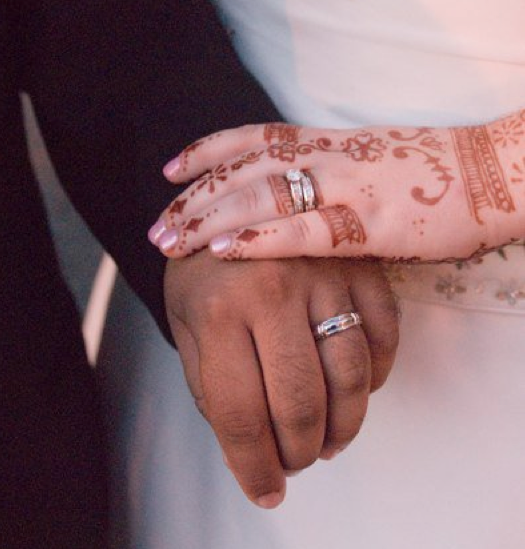
The reason I write Indian/Caucasian romance is fairly straightforward–that’s one of my wedding photos above.  When I write an interracial relationship, my preference is to write one that looks like my own (unless there’s reason to do otherwise, as in the ghost novel).

The few times I’ve seen an Indian/White romance (particularly an Indian man with a Caucasian woman) have primarily been historical pieces set in India during the British reign.  That’s the subcontinent equivalent to the Native American man/White woman bodice rippers I stole from my mom in the late 80’s and early 90’s.  Exotic male either kidnaps or serves as an antidote to the white female’s humdrum life.  James Cameron’s Titanic movie does this only within social class instead of color, as do many of the billionaire man/regular girl stories.  But in all of these scenarios, the man is exotic because of his skin color or his social class or whatever.

You almost never see an interracial couple where one partner is Indian and the other white treated matter of factly in media.  I loved Smash for many reasons (including because I’m a giant Broadway nerd), but one of them was that the Dev/Karen couple of season 1 existed.  Dev’s Indian-ness was not portrayed as exotic.  Yes, there was one Bollywood inspired number, but Raza Jaffrey’s Broadway claim to fame was that he was the male lead in Bombay Dreams, so I’m giving that a pass.  The Mindy/Danny relationship on the Mindy Project is another I’m aware of, although we haven’t gotten into the show as it’s not Netflix yet.

I want to read (and by extension write) relationships where my characters are in an interracial relationship, but where the story is about the couple instead of fetishizing the culture/skin color of one of the partners.  Obviously skin color and culture will impact that character;s day to day life, but there are ways to do so that round out a character’s personality without reducing them to stereotypes or constant racial cues. (I’m looking at you Ann M. Martin with the unending use of creamy skin or softy accented voice when referencing the Kishi family.)

I was inspired to write this because of the hashtag #WeNeedDiverseRomance, which I encourage you to go read.  Then let’s create a more diverse body of literature together.  Let’s have broad notions of what interracial looks like.  Let’s have older characters.  Let’s have characters who aren’t the image of perfection.  Let’s have characters with disabilities.  Let’s try to have the messy and complex reality of life reflected in our writing.

Sometimes you have to suck…

I’ve been stuck on Chapter 6 of my ghost book for over a month.  I’ve tried writing it multiple ways and no matter what, I hate it.  HATE IT.

Screen Shot 2014-09-24 at 8.44.14 pmBurn, chapter 6.  Burn.

I am giving myself permission to suck.  To write it, knowing it will be weak and will likely be cut entirely or hacked to pieces in the second draft, so I can move on with things.

I have tried to write this novel on and off for about a decade–a draft of it was written for a Halloween contest, and the characters have never left me alone.  But this is what inevitably happens to me when I’ve tried to write full length pieces–I hit a speed bump and get mired in the desire not to suck.  So the book has gone through several incarnations with characters of different names, different plot lines, and so forth.  But it always seems to hit a point where I can’t move past the momentary bad writing.  I second guess every choice I make until I have a zillion starts to the chapter, but no finish line.

So what changed?

Lynn Townsend.  I’m going to have to paraphrase because otherwise I’ll spend forever trying to track down exactly what she said to me, which was “Just write.  It’s okay that it sucks.  Just keep writing through it.”  Which is obvious.  Which is advice I’ve given.  But hearing it from a REAL AUTHOR who actually is willing to put one of my stories in her anthology (and thus thinks I don’t suck) changed something for me.

Now, you may say “but Delilah, you’re an author.”  To which I would tell you “Yeah, but I’ve never written or published a book, so I’m not a REAL AUTHOR like Lynn or Alison or Insert Name Here.”

So I’m going to suck it up, and I’m going to suck.  So I can move on.

Screen Shot 2014-09-24 at 9.04.17 pm

September 30th.  I’m stating it publicly–I will send some terrible sad chapter 6 to my editor and move on with my life by September 30th.

#OutWriters Why I write LGBT characters

As a publisher of queer books for over two decades, Cleis Press is committed to encouraging LGBTQ people to be visible, free, and well-pleasured. The presence of LGBTQ voices in literature is dear to our hearts.

In celebration of Pride month, we’re kicking off a brand new project we’re calling Out Writers. Join us—and a tide of queer voices—in celebrating the importance of LGBTQ writing.  Want to get involved? Please take a moment to share a sentence or two about why queer writers are important, and/or what it means to you to write as LGBTQ author, and use the hashtag #OutWriters.


Screen Shot 2014-06-26 at 9.40.30 pm

I suppose that I write LGBT characters for the most obvious reason possible–I’m also a member of the LGBT community.  More to the point, I write bisexual women because I am a bisexual woman.

Too frequently I see bisexual women portrayed as bisexual as part of a threesome for the benefit of their male lover, or that a scene with another woman is painted as a “lesbian” scene.  I write bisexual women because I’m writing a story right now which has a bisexual female protagonist, and had it referred to as a lesbian story.

Bi invisibility is an issue in the real world and in the literary world, and anything I can do to help mitigate that is a worthy thing.

An Interview with Alison Tyler

Screen Shot 2013-10-24 at 9.55.41 PM

Best. Birthday. Present. Ever.

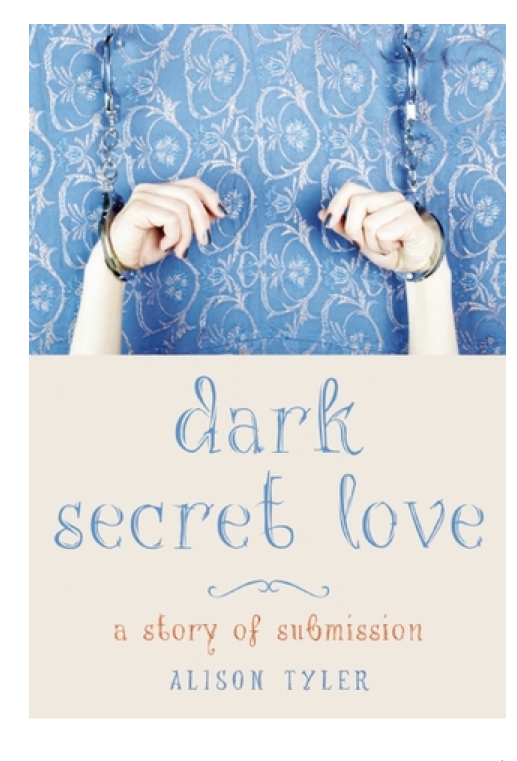
As part of her blog tour for Dark Secret Love (review below), I have author and editor extraordinare Alison Tyler visiting here today.

Readers know that I’ve been struggling with balance and writing process of late.  So when I had the chance to metaphorically sit down with Alison I needed to know how she does it.

You are ridiculously prolific.  Are you a robot?  How do you do it?  Do you ever blow off writing to binge watch a tv series on Netflix?

Ha! How did you know that I am a robot? I try to keep my wires all tucked in nice and neat. And I wear this fine dusting of pale powder over my chrome-colored skin.

Truth is, I write all the time. Even when I’m not writing, I’m writing. (Yes, that made oodles of sense.) Basically, I can’t turn off the part in my brain that tells stories. I entertain myself 24/7 (or 23/6) with scenarios about strangers I see only for a sliver of time. Not sure what life would be like without the constant whirring of words, but that’s my world.

That said, yes, yes, yes, I am addicted to a few different series. Late to the game, I found West Wing and became instantly obsessed. I lost a few weeks to House of Cards. If I love a series, I will start re-watching from the beginning as soon as I hit the end.

The strangest place I’ve found myself writing erotica was on my laptop in the parent cafe of an indoor kid’s playground.  I was huddled off in a corner, trying to finish a story while my (then) 4 year old ran around with the other kids.  What’s the oddest place or situation you’ve found yourself writing?

The bathtub. The shower. The car. Anywhere I can’t easily get to a piece of paper and pen. That’s often when I come up with my best ideas. Then I simply have to repeat the words to myself, like a mantra, until I can get dry or pull over. (Or both.) You don’t know how many times I’ve been wrapped in a towel at the computer, typing as fast as I can to make sure the words don’t escape. That wet spot on my seat is proof.

Obviously Dark Secret Love is a bit different than other books of yours with regards to how long you’ve been working on it/the highly autobiographical aspects.  Can you talk about how the process of putting it on (metaphorical) paper was different from the way you’ve written other stories?

Dark Secret Love began as a solitary blog post. An answer to a reader’s query: How did you get your start? Many writers would be able to respond in a neat, orderly fashion. My answer has taken 500,000 words—so far. My guess (or hope?) is that I’ll never reach the end. For a year and a half, give or take, I wrote approximately 1,000 words a day on the story. Gathered all together, the “book” would be over 2,000 pages long.

This is the most unique project I’ve ever worked on. There are scenes (coming up in future installments) written from the point of view of different characters. I’ve switched tenses. I’ve played with time. I’ve broken every rule taught by English comp instructors. If you can’t entertain yourself, why bother? I wanted this series to be different.

About Alison

Alison Tyler is nothing if not busy. She’s the editor of 50 anthologies (for Cleis Press), as well as collections for Harlequin, Plume, and Pretty Things Press. Her novellas include Giving In (Harlequin), Those Girls (Go Deeper), and Banging Rebecca (Pretty Things Press). Visit alisontyler.blogspot.com for impromptu makeup reviews, lingering musical longings, and the occasional 80s flashback.

Review of Dark Secret Love

Dark Secret Love is a fictionalized semi-autobiographical story of a woman’s entrance into and acceptance of her own submissive nature.

While I enjoy erotica, I don’t often connect with characters the way I did with Samantha.  Perhaps it’s because Sam’s experiences are based on some of Alison Tyler’s experiences, and thus ring more true?  Or perhaps because I understand all too well the experience of being offered what you want and running away in fear.

While there is plenty of hot sex, Dark Secret Love is more than that.  It is a deeply personal exploration of submission.  If you’re not a member of the scene and want to understand how we got this way, this book may be enlightening for you.  If you are a member of the scene, the book will ring more true than most.

My only complaint?  That the second book isn’t out yet.

I can’t recommend it enough-run, don’t walk to get your copy today.

Disclosure-I did not receive compensation for this review or the opportunity to interview Alison.  I am, however, included in an upcoming anthology of hers.

Balance

I’ve talked before about struggling to find balance as a writer and a mother.  It’s something I often fail at, and sadly my writing is one of the first things I give up when something else needs to be done.  Partially that’s because I’m a terrible procrastinator.  More often, though, it’s because something is going on that kills my mood.

Screen Shot 2013-10-15 at 6.14.17 AM

I struggle to write erotica when my mood is anything but sexy.  When my kid is puking.  When I’m so tired from my day that I fall asleep at my laptop (ironically, though, I’m writing this at 6am after not having slept all night).  When watching tv feels like a challenge.  When I the only time I can carve out is in the parent cafe of an indoor playground.  When the mood isn’t sexy, each word is akin to pulling teeth.

We are heading toward year’s end at a frenetic pace.  It’s early yet, but I’m starting to think about 2014, and how I would like it to be different.  I want to prioritize my writing.  I want to carve out sacred time that is only put aside in extreme cases.

Screen Shot 2013-10-15 at 6.12.10 AM

Very soon NaNoWriMo will start.  I won’t be starting a new story, but I do plan to use it as a motivational tool to kickstart my progress with the novel.

Do you struggle with balance?  What do you give up to write?  Do you give up writing to get other things (even something like grocery shopping) done?  What’s your approach?

Interview with my editor

Although I’ve been writing erotic fiction for roughly 11 years now, having an editor is a thing for me.  I first worked with an editor when I wrote for Carnal Nation.  I first thought to work with an editor for my fiction after Carnal Nation shuttered its doors.  I tried a few people, but I never found the right person.

A friend of mine offered to look at a story of mine last year.  I sent it over to her, and thus began my professional relationship with Jessica Augustsson.  Over the past year, I’ve really seen the quality of my work go up.  We’ve worked together on (if I haven’t lost count, and I think I may have) 5 short stories, and she is now editing as I work on my novel.  She is my go-to reader, and I can offer no higher praise than to say that I credit my recent acceptances in no small part to her editorial eye.  I’ve also learned what some of my “usual suspect” faults are as a writer, and now when I edit my own work, I have a sharper eye for those faults.

Worth noting-my blog is very much a first draft/off the cuff writing, so don’t blame any of my faults on the blog here on her!

I thought it would be fun to ask her some questions and publish her answers on the blog.  I know many of my readers are also writers, so you may find her answers enlightening.

pith_helmet_2Holder of the metaphorical red pen…

1-How did you become interested in editing?

Oh, gosh. I don’t know really. I think maybe there is something in the things we love to do that emerge even at an early age? I have distinct memories of my grandfather teaching me to read using magnetic letters on an old coal-burning stove we had in our house when I was a kid. Throughout school and well into college, I always enjoyed my English classes, both the literature aspect AND the grammar aspect, but never had an inkling of what kind of career one should have with an English degree. So even though they were the classes I loved the most, I sort of pushed the idea aside. I was focusing on political science, particularly international politics, which is a bit ironic too, I suppose. 🙂 And then out of necessity, once I was living and attending university in Sweden, I needed a way to earn extra money. Well, the English department had a deal with the business school, and some of us English students would edit their business theses. The pay was pretty low, but it was at a time when every little bit helps, and I really sort of enjoyed it, even though the subjects might not have been all that riveting. (I have a LOT of semi-useless knowledge about Sweden’s wood pulp industry now, and how a recent name change did NOT go over well in France! *grin*)

Then, off and on, I did some editing and translating for some software companies through people my husband knew. Then finally after finishing my Master’s, I became a technical writer and editor for a software company in 1999. After about seven years with them, I worked for a company that assigns projects to freelancers for just under a year before going out on my own. I learned some really valuable things while working for them, such as what sorts of texts people tend to want editing for, what various publishers expect, and the large and small differences between different English speaking countries’ general editing rules, as well as a few different diplomacy tools for working with a variety of clients. However, these sorts of companies that farm out projects take an extremely large chunk of the fee, and it was just unsustainable for me in the long run, as far as living expenses and such, to continue working for them.  Fortunately, when I took the leap of going out on my own, a few of the clients I’d asked about giving me possible references decided to come with me.

So my way of becoming a copyeditor was perhaps not the typical track. I’m not really aware of how things might be for those who worked directly for publishing companies or newspapers.  I do know many companies like to have lists of freelancers who’ve proven reliable, and through word of mouth, I’ve managed to get myself added to a couple of those lists.  But that channel of work doesn’t provide much, so self-advertisement is still key for freelancers.

2-What sorts of things do you edit?

Hmm… I really think it might be easier to say what I _haven’t_ edited. 🙂

I really enjoy my work because the variety is so…er…varied! From medical and scientific journal articles to museum leaflets to erotic and science fiction short stories to full-length fiction and non-fiction manuscripts. I’ve even helped ghost-write a novel and some short stories.

3-When an author sends you a piece, what is your process?

I always offer a sample edit, so usually that’s the first thing I do. I find this gives me a chance to see what level of editing might be needed (and gear my fee and time allotment accordingly), and gives the potential client a chance to see what kind of edit they’re going to get in return. That way, if they just don’t feel like we’re going to mesh, they can decide not to hire me. That’s usually fine by me, as sometimes it can be more work to discuss disagreements than it is to simply edit a document. (This sounds really awful, doesn’t it? Basically, I try to offer suggestions to improve grammar, flow, clarity, etc., and if a client decides not to go along with that suggestion, that’s obviously up to them. But I’ve had clients try to explain to me with each and every item why their way is better and want to know in detail why I made the suggestion I made. (Which, by the way, I have no problem with explaining, but in one case the client asked this repeatedly for weeks for everything I edited and it ended up being such a time and mental energy suck.)) In any case, I like to give people the view of what to expect up front, so they can make a determination as to whether they’d like to use my services. Based on comments on my website, you can see that most people are pretty happy. 🙂

Anyway, after that, I’ve found with shorter works, I edit them, just using the first-time reader eyes to inspire thoughts and questions as I go through, which can help point out places that need clarification, etc. Then I send the work back to the author and they can look through, make changes if they like, and send it back, as I always include a quick second read-through in my fees. This is because I know writing and polishing that writing is a process and not just a one-time fix-it-and-it’s-done deal. Sometimes when we change things, other little errors can creep in, too, without us realizing it, so I always try to keep an eye out for those in the second read-through.

For longer works, I usually do basically the same process as above, but on a chapter-by-chapter or section-by-section basis. I used to do the whole thing before replying, but I found through the years that if only a short section is edited at a time, this gives the author a chance to see the comments in say the first chapter, notice this is something they have a problem with throughout the novel, and they can fix the second chapter before sending it to me for the first edit. This gives them a better edit, since I’m not only highlighting the same thing throughout, and helps them develop their writing skills at the same time.

4-I’m sure every author (me included) fantasizes about getting back a piece with the “perfect! No errors!” back from their editor. Does that ever happen?

🙂  No, I’m afraid not. Not even on my own writing! Fresh eyes will always find something. I have a couple of people I trust to edit my own work, but for real story submissions and things like that, I’m never going to send out my work unlooked at by someone else. No matter how good a writer you are, how excellent your grammar skills, there will always be a typo, a reference error, a subject-verb disagreement due to having changed a sentence somewhere along the line. Plus, when we write, we’re trying to get mental images down into words on paper (or the computer screen). When we do this, a lot of material gets left in our heads. We see it clearly because we know what’s going on. But someone else who reads it won’t have all the data you have, and so a lot of my red marks in stories have to do with that–helping the author complete the picture on paper so it matches as closely as possible the one in their heads.

5-How do you balance yelling an author where their work needs help/clarification/etc and not making them cry. I ask because your comments always motivate rather than deflate me.

Diplomacy definitely turned out to be a lot bigger part of my job than I’d first imagined. But there has to be this understanding that people’s writing work, whether it’s a story or a PhD thesis, is their baby. And here I am slashing it up and sending it back to them as a big red, blobby mess. The important thing to do is much of what psychology teaches. You don’t tell somebody that they did something _wrong_ or that they wrote badly. Writing is so subjective anyway. So instead of merely saying something is unclear, for example, I will try to also add a suggestion or a question showing what kinds of questions the part that’s unclear is prompting in my head.

6-Do you have any advice you wish authors could hear before they send you their work?

That a quality edit is going to take longer to edit than they think. Time and time again I’ve had people send me really long theses that are due the next Monday or full-length manuscripts that they think should be ready for publication in a month. As a substantive editor, I know it’s going to take longer than that for even the absolute best of writers–and no, it’s not _just_ because I’m slow. 🙂

The other thing which is tied back to the previous thing is that many authors think that they just hand their manuscripts over to me and I hand them back a ready-to-publish copy–that I’m going to “fix it” and all will be done and pristine. People need to understand that the editing process is a back and forth thing. It’s going to require just as much work (or more) from them as it is from me before they have a publishable copy of anything. This is also why it takes a long time.

Then it would be nice if they also knew that once an agency or publisher has accepted their work, they will likely run it through another editing stage. This does not mean they have wasted their money on me. What I do is substantive editing, and what the in-house editor does is final editing that prepares it for publication by going through and generally polishing, fixing formatting, and some mild line editing and typo corrections–yes, those are going to creep in too. Even the best of us are human. I help people get their foot in the door as best I can. But there will almost always be a bit more editing to come. Writing’s a looooong process.

JessEdit.com

Beta Readers

I’m in the process of wrapping up my third story submission for the year. 

When I write a story for submission, I try to get a full first draft together. I’ll let it sit for a day or two. Then I try to edit for my common sins-run on sentences, irrelevant tangents, and working on being more concise. I read my story aloud to look for awkward phrasing, or a missed word (you’d be surprised how you can forget to type the word and or what have you, and when reading it, your brain often adds it in).

Next comes the beta reading and response stage.

Screen Shot 2013-05-24 at 12.18.16 PMsource

I am a good writer, but what takes my stories from “okay” to “publishable” is taking advice from beta readers.

Some of my beta readers give me grammatical feedback. However, this has more to do with the fact that I know a few serious grammar nerds than with what beta readers most frequently do.

The majority of beta reader feedback is content specific. Their feedback helps me understand when I’m giving too much set-up (or not enough), what darlings I need to kill (those details in the story that you love, but may be irrelevant to the actual plot), and what improvements I need to make.

I’ll listen to their advice and edit.

I try to get multiple perspectives. Every reader has a different world view and different experiences they bring to the reading experience. Those various perspectives help you get a wider view of your story and the strengths and weaknesses.

The story I’m currently working on takes place at the Boston Tea Party Ship and Museum (a former workplace of mine). My beta readers who are also from the Boston area all picked up on the Tea Party references (which were minimal in the first version). It’s a huge part of our social studies curriculum growing up, so they didn’t have a lot of feedback on that. My friend in Seattle was able to figure out the reference because she knew I’d worked there. Otherwise she wouldn’t have picked up on those same references because the Tea Party isn’t emphasized as much outside our part of the US. I realized that I needed to go back and do some edits to be more specific/show my setting in a different way because of her feedback.

I’ll repeat these steps as necessary until I think I have the best version of the story possible.

Do I give my beta readers every single fix they ask for? No, I don’t. At the end of the day, I’m the one with the vision of the story, and I have to listen to my own instincts about the story. Sometimes I disagree with my reader about a character’s personality or motivation, or what have you.

When you submit a story to an editor, you have to send your absolute best work. In my experience with anthologies, you are submitting the story you want published. The editors are not beta readers-they don’t ask you to make a change, or fix something-they accept or reject the story.  I’ve gotten feedback about liking a detail in an acceptance, but I know that when I send in the story, that’s the final draft.

Thanks to my beta readers, I’m far more confident about the quality of the stories I submit.

Inspiration

IMG_4838The strangest things can inspire me.  The Enterprise pizza cutter above inspired a short story last year that, as I’ve tried to expand it, may turn into a paranormal romance.  Featuring one of Santa’s shape-shifting reindeer.

Yes, I am a giant nerd.

I had a physical last week, and as the doctor was manipulating my body to check for range of motion (I’ve had back surgery, and have recurring back issues even now) it occurred to me that the patient/doctor relationship is a D/S one.  We go to our doctors as supplicants.  They move our bodies for us.  We follow their directives.  I was inspired.

The song “Persephone” by Escape Key made me rethink the Persephone/Hades relationship. Lyrics here.

Renewal was inspired by both the struggles my partner and I had reconnecting after we had a baby (ms4) and that as I was writing it, I was dealing with my transition to expatriate life in Singapore.

My stories are not biographical, but they do reflect pieces of me and what’s going through my head at any given moment.

Music to write by…

My writing time is cobbled together from stolen moments.  While Ms 1 is napping and Ms 4 is in school in a coffee shop.  I type by the light of my screen as Ms 1 snores in her crib within arms reach of me after bedtime.  Alone in my bedroom during those blissful hours when the girls are someone else’s responsibility (my husband or my sitter).

Neither the hiss of the cappuccino maker nor the delighted giggles of my children make for an environment conducive to writing smut.  So I slip in my ear buds and use music to help create the right mood to write by.  Half the time I’m not even really paying attention to the music-it’s about giving my subconscious a clue as to where I want to go.

My music isn’t always the same.  I have a story set in New Orleans, and when working on that piece, I put on my New Orleans playlist-heavy on Preservation Hall Jazz, the sexy growl of Tab Benoit, the soft sweet voice of Theresa Andersson, and other assorted local artists.  While writing a Lancelot/Guinevere piece, I put “The Trial of Lancelot” and “Avalon” by Heather Dale on repeat.

But I do have an erotica playlist.  If I don’t have a specific agenda (such as above) this is what I’ve got playing on shuffle in the background.  Songs are listed by artist…

  • Rag Doll by Aerosmith
  • Naughty Girl by Beyonce
  • Cradle of Love by Billy Idol
  • Gimme More by Britney Spears
  • But I am a Good Girl by Christina Aguilera
  • Express by Christina Aguilera
  • Genie in a Bottle by Christina Aguilera
  • Your Body by Christina Aguilera
  • Infatuation by Christina Aguilera
  • Don’t Let Go (Love) by En Vogue
  • Whatta Man by En Vogue and Salt N Pepa
  • Persephone by Escape Key
  • Lollipop by Framing Hanley
  • Damsel in Distress by Idina Menzel
  • I Kissed a Girl by Katy Perry
  • ET by Katy Perry
  • Addicted by Kelly Clarkson
  • Chocolate by Kylie Minogue
  • You and I by Lady Gaga
  • Alejandro by Lady Gaga
  • Teeth by Lady Gaga
  • Strangers on a Train by Lovage
  • One More Night by Maroon 5
  • What Would Happen by Meredith Brooks
  • Gett Off by Prince
  • Cream by Prince
  • Buttons by Pussycat Dolls
  • The Kiss (from Last of the Mohicans Soundtrack)
  • Fiery Nights (from Lord of the Dance Soundtrack)
  • Stay by Shakespear’s Sister
  • Touch Me by Smash Cast
  • Kiss Kiss by Stella Soleil
  • Sexy Naughty Bitchy by Tata Young
  • I Wanna Be Bad by Willa Ford

If my appalling taste in music hasn’t sent you packing, what do you write by?