Wicked Wednesday:The challenge of writing a threesome

I’m a little late for Wicked Wednesday (it’s just after noon on Thursday here in Singapore, but it’s still Wednesday in many parts of the world), but I still want to talk about threesomes.

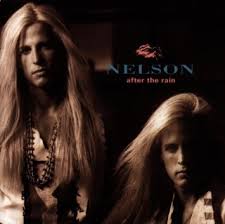
The first time I remember imagining a threesome, I was still a teenager. I was really into Nelson (the band with the twin brothers fronting it) years after they were a mainstream success. Much as teens today are #teamwhoever in a YA love triangle, I found myself struggling to figure out which of the twins I liked more, basing my opinion of the day on whatever teen magazine I read.

after the rain

It was the first time I thought “maybe I don’t have to choose,” and proceeded to make out with my pillow (as one does) pretending it was one and then the other or not caring which one I was kissing. I didn’t have the language to say I was fantasizing about a threesome because the pre-Internet world was a very different world.

With twenty-odd years of experience, I can see the evolution of my interest in threesomes as well as my understanding of all the various permutations of acts and bodies. However, I’ve yet to incorporate one into a story since making the shift to professional author, and that’s because it’s very hard to write a good threesome.


When you write an m/f sex scene you can use their names or the pronouns he/she to make it clear who is doing what at any given moment.

Things get a little more tricky when you’re writing a 2 person sex scene with people who identify as the same gender. Pronouns are much less useful–which s/he? Body parts become ambiguous–who’s dick is that? In writing Love is a Virus I learned that you end up using character names in same-sex erotica a lot more frequently than in m/f sex scenes.

Threesomes take the difficulty of writing a same-sex erotic scene and dial it up a notch. Either two or three of the participants will identify as the same gender. You now have three mouths, six hands, six nipples (and possibly some number of breasts) and three sets of genitalia. It is a delicate balancing act to ensure that the reader is keeping track of the participants, even if the characters themselves are not.

Is your threesome your character and their partner with a “guest star,” or are you writing a polyamorous relationship, or a triad? This affects the chemistry and the interaction each person has with the others.

Writing erotic romance with two characters is hard, but with three you have to contend with issues of jealousy, whether someone’s family can know about the relationship, the relationship dynamics of three people, and so forth.

One of the authors I’ve seen execute this well is Alisha Rai in Glutton for Pleasure (which also features male twins).

This is not to discourage you from writing threesomes–people enjoy them in life and in fantasy–but rather to get you thinking about how to write a threesome scene that works on all the levels.

wicked wednesday

Clichés

I recently spent some time with my “Literotica” folder of work. These are stories I wrote in my first few years of writing erotica, circa 2001-2003. I’ve talked about my horrible, cliché-riddled Star Trek: The Next Generation fanfic (and when one chapter got posted to Fark and Wil Wheaton saw it)

q tip

But, my friends, the overused tropes didn’t stop with the Wesley Crusher fic. I also wrote about Q. Once I began to think through what a Q’s seemingly limitless power could do in bed, my Mary Sue character tossed Wesley aside for Q in a multi-chapter mess.

fireman

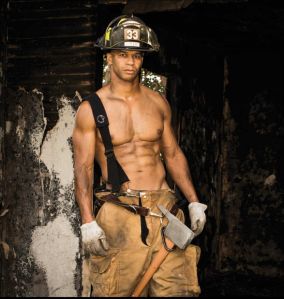
My final series (as opposed to stand-alone short stories) was about a girl torn between her new police officer boyfriend in NYC and her fireman ex in Boston. (One stereotype? Why not two?)

While on one hand those stories should never see the light of day, on the other I can see the seeds of my voice as a writer. I wish I still had the multi-chapter fanfic opus a penpal and I wrote together set in Mercedes Lackey’s Valdemar world (for my nerds, we met via the Queen’s Own zine in the 90’s). Or the Christopher Pike rip-off I called “Curse of the Silver Teddy Bear Necklace,” so I could see how I’ve as a writer.

I do have one example, though, my two part post(1, 2) of my third grade magnum opus,

The point is that no one picks up a pen and is an amazing writer that day. You grow and you accept feedback and rejection and you will eventually get there–maybe my decade between starting to write erotica and publishing it was pushing it a bit, but I took years off in there to have kids, get married and go to grad school.

It’s okay to have clichés–in fact, sometimes it’s fun to play with them just to turn them on their heads. I have a story called “Doctor’s Orders”–the anthology is in limbo at the moment–where I specifically set it up to look like the playing doctor trope, only to put in a last second twist that changes the entire story. Tropes are okay as long as you make them fresh again with your writing.  Everyone knows the couple in the romance novel will fall in love–it’s the journey that’s interesting.

cop

And that police officer/fireman/college professor love triangle? Maybe that has some potential after all.o

***I wrote this in advance and may still be in the hospital, or at home recuperating on pain meds. Please be patient if it takes a while for your comment to be approved or responded to.***

Being a Writer in a Heartless World–Guest Post by Jaylan Salah

Jaylan is a new friend from Egypt via Twitter. I loved her beautiful prose on her Tumblr, and was so excited when she volunteered to do a guest post here on my blog. I love what she has to say about being a writer.
editing

Being a Writer in a Heartless World

First of all, thank you Delilah Night for having me here. Visiting a blog feels like visiting a friend’s home for the first time. And the first impression, even if it never lasts, always has this tinge of excitement and anti…cipation.

Sorry Dr. Frank-N-Furter. I couldn’t help but quote.

Once upon a time, writers were considered sacred human beings.

They were gods, demi-gods, prophets, creatures everybody got so curious about but knew they were unattainable. Something of the extreme extraordinary, an untouchable, in peculiarly a bad and a good way.

This is not the case nowadays.

Apart from a few people who actually find something that they really want to do, being a writer has become a wish, a desirable profession. Why? I honestly have no fucking clue. But still, as days go by and social media become crazier and more invested in people’s lives, writing becomes even more of an everyday act. How would people fill their Facebook statuses and their Twitter boxes if not with words? Yes, jobs like graphic designers, photographers and actors have also acquired too many admissions to count, but these are all “braggy” professions, ones that could bring their seekers –despite their lack of talent- actual profit.

I mean, even lousy graphic designers could make a living out of designing book covers for amateur writers, or designing logos for startups that have no clue why they started up. Photographers would find it so damn easy to make a living out of taking photos of their friends’ as they get married, get fucked or simply want to celebrate a newborn baby, not to mention how many girls are into modeling and for that they would go through thick and thin to have their sultry, sexy photos taken by an “affordable” professional photographer.

As for actors, well, people have been dying to become actors ever since Hollywood became Hollywood. It’s the easiest way to get girls –and guys- make money and become popular which is –in itself- the epitome of happiness for some.

But why writing?

When did writing become so fucking interesting and alluring? Why is it an object of affection with all the mess that comes along?

And who the Hell am I to speak?

I mean; I am relatively an unknown. In my country I am a struggling film critic and still haven’t published a damn book. Internationally I am a struggling film critic and poet. Who am I to judge or give an intervention?

Let me introduce myself.

Jaylan. Late twenties. Single. Hedonist. Feminist. Wolf (yes I was one in my past life and yes I believe in reincarnation and yes…that shit has also become cool and trendy I have no clue why). Writer.

Other passions include: Cinephile. Dancer. Spiritual. Singer.

That’s it?

Not really, I have a lot to offer the world. For starters, I left a decent –but boring, hellish- government job in November 2014, and ever since then I’ve been a full-time writer.

Do I make money out of this? Yes, I do. Does it offer me social and financial security? Not really, actually not at all, putting in mind I am not as active-proactive as I should be.

Then; why Jaylan? You may ask.

Actually two friends who used to be really close to me warned me against leaving my full-time job. The decent, boring and hellish job where I wasn’t getting paid as much as I wanted but at least I was considered an individual, with a job. It felt more respectful back then. I tried applying to many full-time jobs afterwards but honest to God everytime I set foot in one it felt like death; or even worse.

This doesn’t mean I made a perfectly right decision by becoming a full-time hippie. For starters, I don’t have a permanent source of getting paid. Secondly, I have no clue whatsoever what office politics mean, not that I care but still it kinda seems like a very important quality to acquire, or so I’ve heard. I take side jobs from time to time; content writing, content editing, literary translation, copywriting, etc. They’re all rotating in the same constellation but they’re what I can do to push myself forward without…

Yes, now to we come to the important part.

I cannot not be a full-time writer. Some of my very successful friends have been able to adapt, see what the society wants and BOOM! Go for it. They want me to get married, I could get a husband in a week. They want me to have a respectable job, one where I sign entrance and exit, I could do that in maybe a month or two (even though jobs are only offered to you in times where you are too busy to care, whereas when you are desperate for a job, you rarely find one).

The point is; do I want to?

The answer is no. I don’t want to become anything but a full-time writer. I have taken too many jobs to support myself and always dealt with that writing “thing” like a side dish, but now –as we speak, as I write this long post for my dear friend Delilah- it’s my main fucking course sans aperitif. I have a novel work-in-progress, a short story collection and a poetry collection in English. They are all my babies now. I have to tend for them daily; feed, bathe and change diapers. They changed from being words on blank Word docs into human beings, manifesting in the surrounding space and talking to me, confronting me about words I have or haven’t written about them. Using me as the human vessel that they need to communicate through with the strange ass world.

So writing? Yes, this fire burning within. This muscle that you need to work on and train everyday. This disease that doesn’t leave you. This joke that you make up for yourself with the “writer’s block” myth only to justify laziness or batshit boredom or disappointment from multiple rejections.

typewriter


Before I go, I leave you with this piece. A short poem where I wrote extensively about writing and how lonely nights greet me as I sit down and try to write:

“Originally published in theProse.com, May 2015”

Spending the Night Trying to Get Inspired

I close the door
Inspiration is an illusion, you know
Troposphere, smelling gas from a canister
Puffing out smoke
Milk glass moon
All you can do is piss on the mountain
Watch the world go brown
I try to write, but nothing comes out
Inspiration is one tricky bastard
A cobra, dancing right and left
I bend down to write
My spine grows out of my skin
My flesh bursts with a thousand loti
Angular vertebrae bask in the moonlight
Trying to taste the tears of the sacral cacti
My skin has a life of its own
and so does my spine
My armpits grow a forest
of unknown Asteraceae
plaits and plaits of blooming petals
Snakes that reach up to the seventh seal
Cobras that dance to the dreams of lonely writers
spending the nights in handcuffs
under covers, working on their lost inspiration
treading softly on lonely hearts, sleepless souls
and glasses of crescent-shaped milk
dipped in oysters of dark-rimmed moon
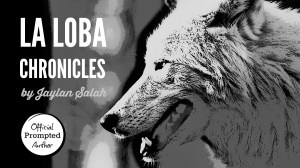
jaylan tumblr


Feel free to visit my tumblr blog

I swear there’s free booze for everybody and much more craziness than I intend to.

Writing while parenting

**I’m in the hospital, so this post was written in advance. Comment approval and response will be delayed. **

When people ask me what the biggest obstacle to writing is I tell them my children.

IMG_8690 Not my children, obviously.

Enjoy a picture of a humpback whale I took off the coast of Maui, early December 2015


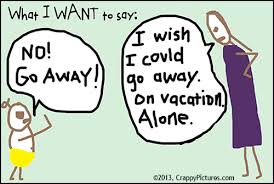
When you are a parent, particularly when you are the primary caregiver, parenting takes up a lot of your bandwidth on a day-to-day basis. There’s the normal things-picking them up from school, overseeing homework, refereeing fights. There are the things I do during writing time instead of writing such as grocery shopping because it goes about six times faster without my kids than it does with them. Finally, there is the emotional toll–there are many night when, once they’re finally asleep (during the writing of my last post, I had to stop and put Ms 4 back to bed no less than five times) all you want to do is collapse in front of netflix and chill…and not in the #netflixandchill sense.

Part of this is the natural ebb and flow of parenting. My two are still quite young, so they need more from me. As they age, they’ll need less and will be able to do more for themselves.

go away

The thing I can solve, though, is that I often don’t honor the time I’ve designated as “writing time.” I use it to grocery shop or take a nap or spend an hour on twitter discussing whether I like the DC or Marvel tv shows better (MCU movies, DC tv shows, for the record). Once I’m out of the hospital (I know, again–no one is more over my being in here than me) I want to honor writing time better than I have in the past.

Fellow parents–how do you balance writing and kids?

Beta Reading Tips

Two years ago I wrote about how beta readers make you a better writer. At the time I was lucky enough to have beta readers, but had not yet been asked to be a beta reader.

This year I have been fortunate to serve as a beta reader for Tamsin Flowers’s excellent erotic serial Alchemy xii. I’ve also had the opportunity to beta read for Lynn Townsend and Jessica Augustsson. In my non-fiction life, I’ve been lucky enough to look over several close friend’s work as well. What I’ve learned is that serving as a beta reader also makes you a better writer.  I am constantly impressed by the twists and turns of these talented author’s minds.  I’ve had the chance to read Tamsin and Lynn writing dramatically different voices and I aspire to write in other voices the way that they do.


Screen Shot 2013-05-24 at 12.18.16 PM

Beta Reading is a skill–finding the balance between “OHMYGOD I LOVE THIS” (which all three of the authors I’ve mentioned will tell you I say regularly) and “this needs work” is tricky.  Too much praise and not enough criticism is great for the ego, but not for improving the work.  Too much criticism and not enough support can really hurt (I speak from experience) and will also not improve the work. It can also be difficult to respect an author’s unique voice, even when you might phrase or sequence things differently.

If you are asked to beta read, I have a few tips for you. These tips reflect both what I have found most helpful from betas as an author and as a beta reader for others.

  • Be honest. Never say you love something you hate.
  • That said, if you hate a work, tell the author that you aren’t a good fit as a beta for this story as opposed to ripping it (and them) to shreds.
  • Be aware of your baggage.  In the September chapter of Alchemy xii, Beth is injured and needs surgery on a kidney. My first email to Tamsin was something like “that was so shocking and risky and and and.” She was surprised by the vehemence of my reaction, so I went back and re-read. What I realized is that I was reacting so dramatically to a kidney injury because someone very close to me had a serious kidney issue and I find kidney injuries very traumatic because of that.  I explained my baggage and suggested that she take her other betas advice more seriously and disregard mine when it came to this part of the story.
  • Be enthusiastic about what you love. Whether it was Jessica’s twist ending, or Tamsin’s gorgeous phrases, or Lynn’s crazy-erotic sex scene, I make a point of saying “this works!”  Beta reading isn’t just about pointing out flaws. You need to tell your author what is working, too.
  • Point out flaws gently. I’ve mentioned before that one of my consistent flaws is to say that someone began to do something.  Lynn said that if your sentence is “He began to walk across the room,” unless it is immediately followed by “but tripped over the cat,” I need to lose the word “began.”
  • Ensure that you do point out areas for improvement. As I said above, while a rave review is great for the ego, it doesn’t help you improve your work–and all of our work can always use a tweak. Make sure that you balance the positive with areas for improvement.
  • If there is a word that is repeated, point it out.  I have found a paragraph where I used the word nipples something like four times in five consecutive sentences.  A beta highlighted the word and suggested I use some synonyms or refine the paragraph to eliminate repetition.
  • Mention their filler words. We all have filler words we rely on–just, almost, very, quite, began to. If you catch a running filler word (something that’s showing up over and over) highlight or otherwise mention it.
  • Give general feedback. Comments throughout the work are helpful.  But so is a summary in the email where you’re returning the story with comments is also useful.  Overall, this (it’s a good rough draft, I really like the core relationship, I laughed like crazy). Specifics like character development, setting (if relevant), and flow. Areas that could use refinement (Your MC’s voice seems to change mid-story–you may want to look at that to ensure that they are consistent).
  • Pay attention to what the author asks you about. If they want feedback on the relationship, don’t spend the bulk of your time talking about the setting.

Authors and betas–what other tips would you add to this?

Public Reading

A few months ago I was incredibly flattered to be asked to share my work at “Kink Dot: An Evening of Alternative Queer Erotica” here in Singapore.

I’m reading from my story “Love is a Virus,” which was first published in Coming Together: Among the Stars, edited by Lynn Townsend. Partially this is because I’ve not published nearly as much m/m or f/f fiction as I’d like to, and partially because my favorite kink is to play with power dynamics.  It’s a theme I’ve visited a number of times in my work (published and that which is under contract) including boss/employee, teacher/student, Doctor/Patient. Without giving too much away about Love is a Virus, I also really enjoy establishing and then subverting a power dynamic.

I love a good beating, but the interplay of power turns me on like nothing else…

For the next week, to celebrate my first public reading, enjoy Love is a Virus for free.

Siem Reap: Let the Edits Begin

When I first started writing erotica, my writing process went like this—

I would sit down and write a story. I would re-read it and do some light editing. I would spell-check it. Then I would submit it for publication on literotica. Within a few days, the story would be published. Email feedback would roll in. I would bask in my awesomeness. Fin

literotica

The thing about writing for literotica or any of the fan fiction hubs is that there is an audience for everyone. As a new writer, that sort of positive community support and feedback can be so valuable for building confidence, especially if you have a fragile ego.

My most productive period on literotica was when I was a graduate student in New York City. The program was a terrible fit for me. I came to the realization that I didn’t want the career I’d been focused on for years. I was new to the city, shy, broke, and miserable. There were weeks when getting a positive review email from a literotica reader was the only good thing that happened to me.

Looking back at that work, while there are stories that show promise—a scene, a character, an idea—the reality is that they are largely crap. The first reason for that is that I was a baby erotica author–those first steps were full of falls and bruises. I was new to the genre and rusty as a fiction author and it showed. The second reason–and if I’m honest–the bigger reason that those stories suck is that they lacked editing.

editing

After I finished the first draft of Siem Reap, I went over my story page by page, line by line and I worked on it until my eyes were ready to bleed. I tweaked it until I thought I had the best piece of writing I could come up with. Then I sent it out to beta readers, and steeled myself to have those readers point out all the faults I’d become blind to.

The difference between amateur Delilah and professional Delilah is that (a) I believe in editing and (b) I know that “my best” is a starting point far from the finish line.

My”best work” is full of flaws that I can’t see because I live in my character’s heads. I write with an ear for English instead of an in-depth knowledge of grammar, which means my writing suffers from grammar errors I don’t know I’m making. Something I think of as clever may be clever, or it may miss the mark entirely.

edit without mercy

I’ve been very lucky to get feedback from several readers. Some of it has been positive, other bits have been critical.  All of it is useful.

I took a break from Siem Reap largely because of health issues. If you follow me on twitter, you probably know that I was hospitalized twice in March due to back and pain management issues.  It’s why I’ve been so absent from the blog–it’s hard to write when the painkillers have you seeing double.

Now that I’m no longer in the hospital, and I’ve begun to rehabilitate my back, I’m ready to dive back into Siem Reap.  I’m trying to look at the forced absence as a positive. The story is not so fresh in my mind, so I have a bit of emotional distance from my characters.  I have valuable feedback to help me revise the story and make it stronger. I’m not so sick of the story that I want to burn it (a real hazard at times).  I’m eager to revisit Meg and RJ and begin the next phase of editing.

april 15

Literotica Delilah would likely have hit publish back in February after the first draft was done. Today’s Delilah is hoping that I will be ready to submit the story by mid-April. Siem Reap is an okay story today.  Thanks to my beta team’s feedback, I think the editing I’m about to do has the potential to make it a great one.


Troublesome words

I’ve begun the edits on the Siem Reap Story.

Screen Shot 2015-01-30 at 7.56.54 pm

Every author falls prey to words and phrases that pop up a little too frequently in their work.  You may have noticed one of mine in my excerpt posted on Jan 18.

“And you decided to just gate crash my dream vacation as a way to catch up? If you wanted to get in touch with me to warn me you’d be at the wedding, you could’ve just used Facebook like a normal person.”

I utilized the find tool and found 69 uses of the word “just” in my first draft.

Here’s the edited version of the same paragraph.  You’ll notice that “just” has been omitted.

Exasperated, she threw the soda into the trash and turned to face him. “If you wanted to warn me you’d be at the wedding, you could’ve used Facebook or email like a normal person. Or Rachel could’ve told me that you would be there. What made you think crashing my dream vacation would be fun?”

“Just” is a word that becomes far to easy to rely upon, and is most often unnecessary filler.  Other words that fall into that category are “actually” (5x) , “very” (45x), “really” (21x), trying (12x), “some” (63x) and “almost” (10x). I’ve learned about some of these weaknesses on my own, others were pointed out by beta readers.

Screen Shot 2015-01-30 at 8.01.01 pm

The other thing I do a find search on before I begin to edit a piece in earnest is “began” (53x).

RJ took possession of her mouth. The taste of him, the feel of him was overwhelming and another orgasm began to build. His tongue seduced hers as he began to move within her. Her hands fisted in his hair, keeping their mouths fused. She needed him more than oxygen. The kisses grew hungrier as if they could make up for every missed kiss over the past six years. RJ’s hips caught the same frenzied pace as their kisses.

Everything began to spin out of control, and the orgasm hit her like a monsoon

One of the best pieces of advice I’ve gotten was from Lynn Townsend, who told me that characters should only begin to do something if the action is about to be interrupted “He began to walk across the room, but tripped over his cat.”

He took possession of her mouth. The taste of him, the feel of him, was overwhelming. His tongue seduced hers. Her hands fisted in his hair, keeping their mouths fused. The kisses grew hungrier, as if they could make up for every missed opportunity over the past six years. RJ’s hips caught the same frenzied pace as their mating tongues.

The orgasm was a monsoon.

Dropping “began” makes for a stronger story. In the example above, you’ll find I didn’t replace began with a different word. If there is a “began,” (or any of the other go-to words) it’s a hint that the entire sentence should probably get an edit.

Now that I’ve shared some of my most troublesome words–what are yours?

Writing and Monkeys

Today I’m over at Lynn Townsend’s blog, talking about writing, Among the Stars, and monkeys.  Head over to Paid by the Weird to read my interview.

Screen Shot 2015-01-30 at 12.49.16 pmPhoto credit: me